
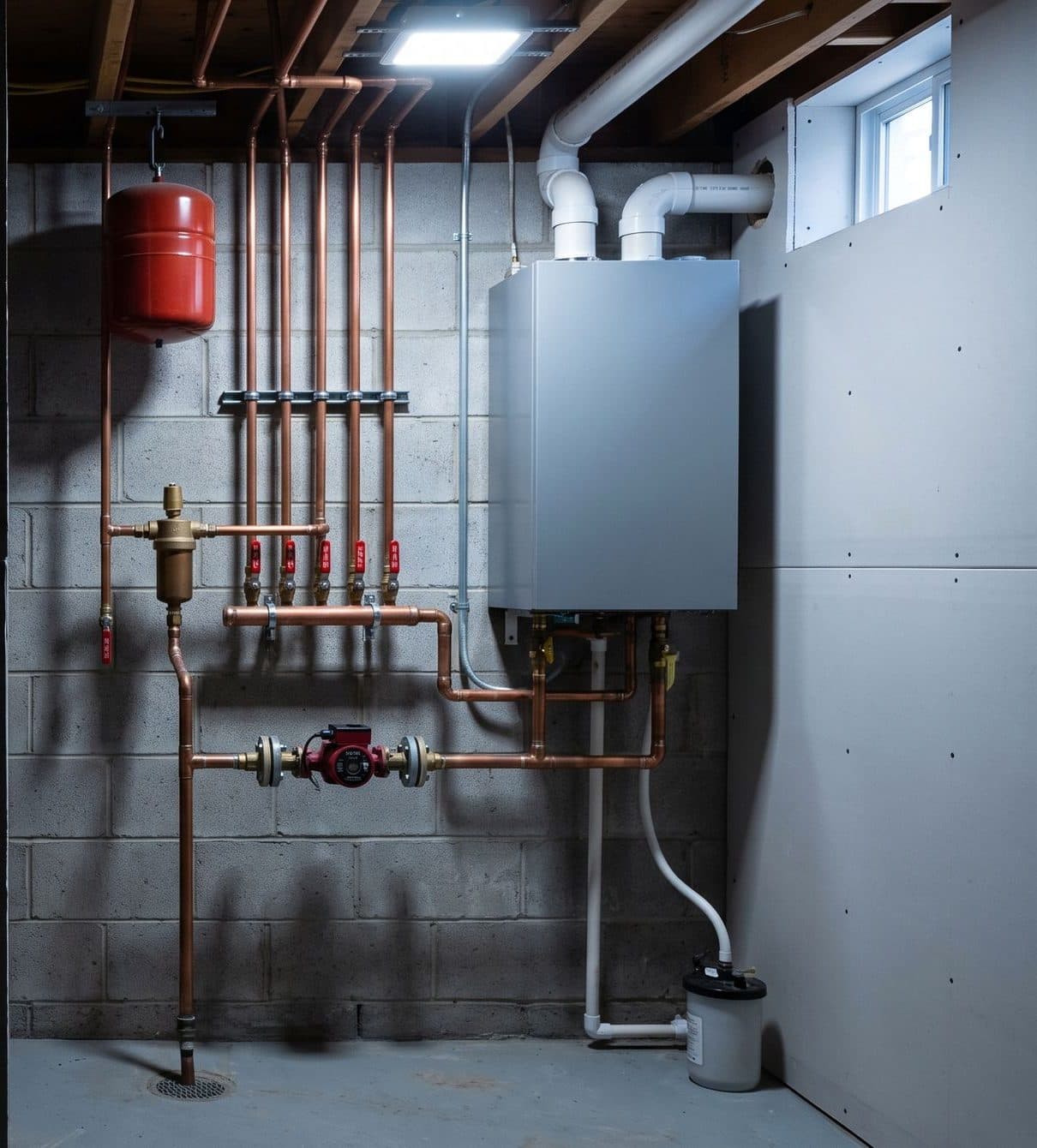
Hydronic
Boiler & Combi Servicein Toronto and the GTA
Boiler repair, maintenance, and replacement across Toronto and the GTA. Hot-water radiator systems in older houses, combi boilers in townhouses and condos, in-floor radiant heat, and boiler rooms in low-rise buildings.
- Written quote before work
- Residential + commercial
- Toronto and the GTA
Open 24 hours, 7 days a week. Call anytime.
Signs
Signs You Need Boiler Repair in Toronto
If two or more of these sound familiar, call before it becomes a no-heat or no-cooling night.
- Some radiators hot, others cold
- Boiler pressure gauge keeps dropping
- Banging or kettling from the boiler
- Water dripping from the relief valve pipe
- No hot water from a combi while the heat still works
- Boiler is 20 years old and the parts are getting hard to find
Timing: Boilers want a pressure and burner check before October, and radiators bled before the first cold night. A system that runs fine in March can still short-cycle in January.
Toronto and the GTA
Boilers in Toronto homes and buildings
Many pre-war Toronto houses heat with hot water: a boiler in the basement and cast-iron radiators in every room. These systems last a long time, but the boiler, pump, and valves wear out on their own schedule. We service the whole loop, from the burner to the last radiator on the top floor.
- 01
Radiator houses in the old city
Semis and detached houses in Riverdale, the Beaches, Leslieville, High Park, and the Annex often still run on hot-water radiators. The radiators usually outlast several boilers. When the boiler fails, a new boiler can usually connect to the radiators and pipes already in the house.
- 02
Old cast-iron boilers
Many of these houses have a heavy cast-iron boiler vented up the chimney, often sized for the house before it had insulation and new windows. They are simple and durable, but they are usually oversized, and parts for older models get harder to find. We check how it is running before suggesting anything changes.
- 03
Condensing boilers in radiator systems
A condensing boiler gets its extra efficiency when the water coming back from the radiators is cool enough for it to condense. Old radiator systems were often sized generously, which lets them heat the house with cooler water on mild days. We look at the radiators and piping to see how well a condensing boiler will fit the system.
- 04
Combi boilers in townhouses and condos
A combi boiler heats the home and makes hot water on demand, with no tank. It suits townhouses and condo townhouses where the mechanical closet is small. Work in a condo building usually needs building management approval, set hours, and an elevator or access booking arranged first.
- 05
Low-rise apartment building boiler rooms
Mid-century low-rise rentals across the city often heat every unit from one boiler room. A failure there means cold tenants, so we check the boilers, pumps, and controls together and give the property manager a written quote. We work around tenant schedules for anything that needs the heat off.
- 06
Commercial boilers for larger buildings
Apartment buildings, schools, offices, and plazas with a central boiler room need commercial-size equipment. We install and service commercial boilers from Patterson-Kelley, Lochinvar, Viessmann, Camus, Laars, Raypak, Weil-McLain, and NTI, both condensing and non-condensing. Many condensing models, like the P-K SOLIS, STORM, MACH, and SONIC, fit through a standard commercial doorway, which helps on retrofits in older boiler rooms.
- 07
In-floor radiant heat
Radiant tubing under a basement slab, a bathroom floor, or an addition can run off an existing boiler. Floor loops need cooler water than radiators, so they usually get a mixing valve and their own pump. We check the boiler's capacity before adding a zone.
Common Boiler Problems We Fix in Toronto
The calls that come in most, and what is usually behind them.
No heat from radiators or baseboards
Likely causes are low system pressure, a stuck zone valve, a failed circulator pump, or an ignition fault. We check the pressure and the ignition first, then the pump and valves zone by zone.
Some radiators hot, others cold
Usually air trapped in the cold radiators or a system that is out of balance, sometimes a sticking valve. We bleed the air, check the pressure, and balance the loops if the problem comes back.
Low or dropping boiler pressure
It points to a leak somewhere in the pipes or radiators, a faulty pressure relief valve, or a failing expansion tank. We check the expansion tank and relief valve, then trace the system for the leak.
Relief valve dripping or pressure climbing too high
Often a waterlogged expansion tank or a fill valve that lets in too much water. We test the expansion tank charge and the fill valve before touching the relief valve.
Combi not producing hot water
Often a flow sensor, diverter valve, or a scaled hot water heat exchanger, separate from the heating side. We test the hot water side on its own to find which one.
Banging, kettling, or short cycling
Kettling usually means scale or sludge in the heat exchanger, and short cycling can mean an oversized boiler, low flow, or a control fault. We check flow through the boiler, the controls, and the condition of the heat exchanger.
Repairs, maintenance, and replacement for boilers + combi systems
Boiler repair
No heat, no hot water from a combi, leaks, pressure that will not hold, or banging in the pipes. We find the fault in the boiler or the system around it and fix that part.
Maintenance
Annual boiler maintenance checks the burner, heat exchanger, venting, expansion tank, and system pressure before winter. We also bleed air from the radiators that need it and check the circulator pump.
Boiler replacement
When a boiler is past repair, we size the new one to the heat loss of the house and the radiators, baseboards, or floor loops it feeds. We tell you whether a condensing boiler, a combi, or a like-for-like unit suits your system.
Hydronic system checks
Radiators, baseboards, and in-floor loops all depend on the right pressure, working zone valves, and no trapped air. We check the loops along with the boiler, because a new boiler will not fix a stuck valve.
Your options: types, not brands. We match the type to the house, then pick the unit.
Combi
Heats the home and provides hot water on demand from one unit, with no separate storage tank.
Best for: Townhouses, condo townhouses, and homes short on mechanical room space
- Space-saving
- Heat and hot water in one unit
Condensing system boiler
A high-efficiency boiler that recovers extra heat from the exhaust before it vents outside through the wall.
Best for: Radiator houses replacing an old cast-iron boiler
- Higher efficiency
- Standalone heating
Commercial condensing boiler
A high-efficiency commercial boiler, often installed as two or more units so one can be serviced while the others carry the load.
Best for: Apartment buildings, offices, schools, and plazas replacing an old central boiler
- Commercial output
- Multiple-boiler setups
Radiant / in-floor
Circulates warm water through tubing in the floor instead of through radiators or forced air.
Best for: Basements, bathrooms, additions, or renovated spaces with floor access
- Even floor heat
- No forced air
How a visit goes
- 01
Tell us what it is doing
Call or send the form. Equipment, what it is doing, and where you are.
- 02
We look at it and give a straight answer
The whole system, including the part that did not fail yet. You get the options in plain words.
- 03
Fix or replace, your call
Written quote first. No work starts until you say so.
Sizing
Boiler Sizing for Toronto Homes
A boiler is sized to the heat loss of the house and to what it feeds: radiators, baseboards, or in-floor loops. Old boilers in Toronto houses are often oversized for a house that has since been insulated, which means short cycling and wasted gas. We calculate the heat loss and look at the radiators, instead of copying the number off the old boiler's label.
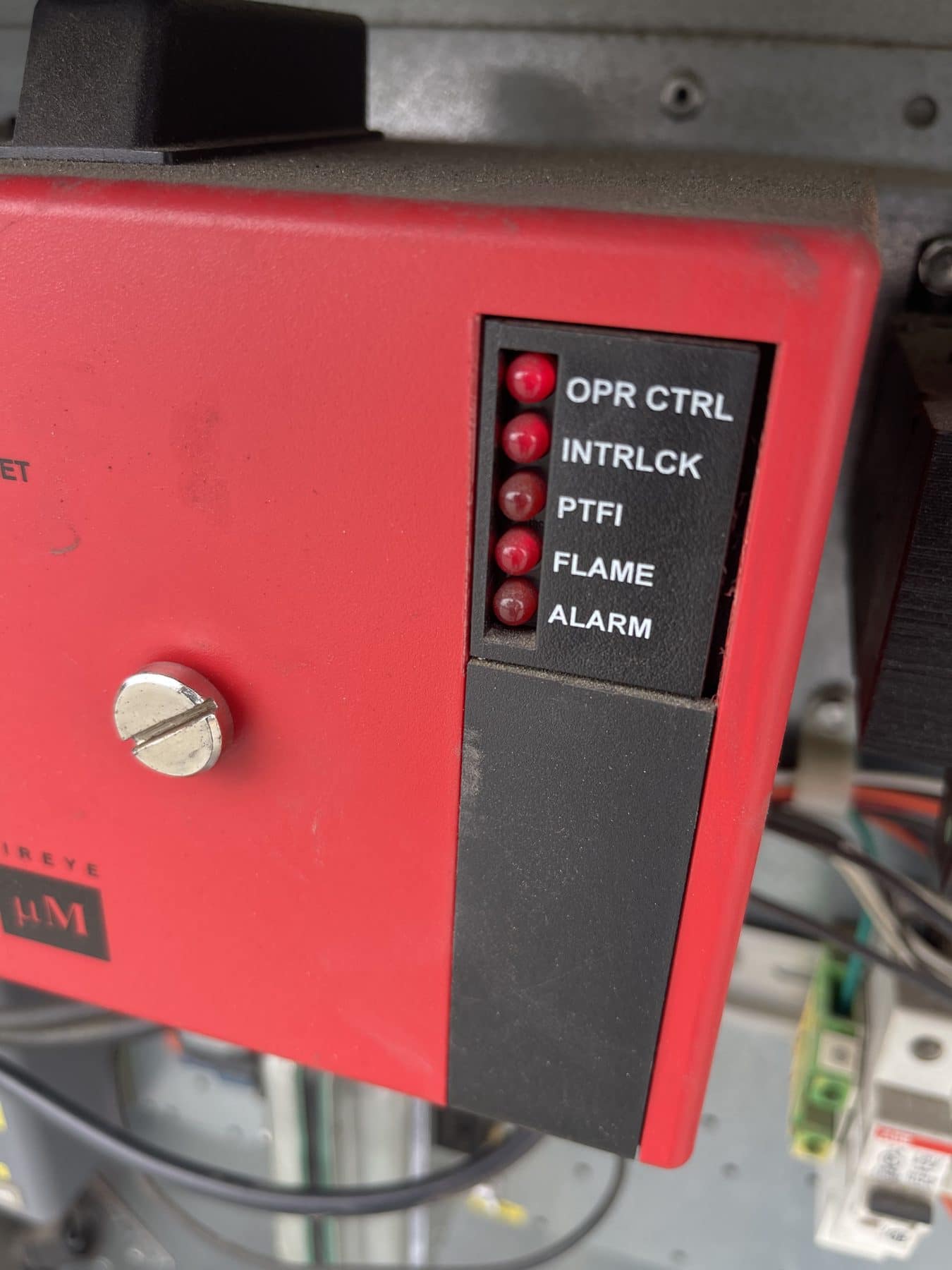 Burner control
Repair or replace
Repair makes sense when
- The fault is a pump, zone valve, or ignition part
- The boiler is under 15 years old
- The heat exchanger is sound
- System pressure holds after a fix
Replace makes sense when
- The heat exchanger is leaking or badly scaled
- It is a 20-year-old cast-iron unit
- You want a combi to free up the tank space
- Parts are discontinued
Hydronic systems get checked as a whole, boiler plus loops, before any recommendation.
What moves the price
Factors, not numbers. We quote after we see it.
Combi, condensing, or radiant setup
Each has different piping, venting, and control requirements.
Number and type of heating zones
More zones means more valves, circulators, and controls.
Piping and radiator condition
Whether existing piping can be reused, and whether old sludge needs flushing before a new boiler goes in.
Venting
Condensing boilers vent through the wall in plastic pipe. An old cast-iron boiler leaving the chimney can change what the water heater needs.
Access to the boiler room
A tight basement with low ceilings and narrow stairs, or a building boiler room, changes the time and the handling.
Code and inspection
Gas and hydronic work has to meet current code, and any permit or inspection the job needs is part of the job.
Written quote after the visit. No work starts until you say so.
Boilers + combi systems: brands we install and service










Ways to pay
Paying for an install
Ask about payment options when we quote the job. The written quote lists the equipment and the work, so you have the full number before you decide.
Boilers + combi systems, answered
What's the difference between a boiler and a furnace?
A boiler heats water and circulates it through radiators, baseboards, or in-floor tubing. A furnace heats air and pushes it through ductwork. Many older Toronto houses were built with a boiler and radiators and have no ducts.
Should I replace my old cast-iron boiler with a condensing boiler?
Often, but it depends on the system. A condensing boiler works best when the water coming back from the radiators is cool enough, and many old Toronto radiator systems allow that on mild days. We check the radiators, piping, and venting before recommending it.
Does a combi boiler work in a townhouse or condo?
Often yes, where the unit has its own gas supply and a wall it can vent through. In a condo building, the work needs building management approval and booked access first. We check the gas, venting, and hot water demand before quoting.
How do I bleed a radiator?
With the heat on, open the small bleed valve at the top of the radiator with a radiator key until water comes out instead of air, then close it. Keep a cloth under it. If you bleed several radiators, check the boiler pressure afterward, and call us if it keeps dropping.
Why is my boiler pressure dropping?
Usually a leak somewhere in the system, though a faulty pressure relief valve or expansion tank can cause it too. We check the whole system to find where.
Do you service boilers in apartment buildings?
Yes, including low-rise apartment building boiler rooms. We give property managers written quotes and plan any shutdown around the tenants.
Which commercial boiler brands do you install?
We install and service commercial boilers from Patterson-Kelley (SOLIS, STORM, MACH, SONIC, MODU-FIRE, THERMIFIC VELOX), Lochinvar, Viessmann, Camus, Laars, Raypak, Weil-McLain, and NTI, for new construction and boiler room retrofits across Toronto and the GTA.
Boilers + combi systems by area
Related services
Get a written quote for boilers + combi systems
We call you back
At the number you gave us, to ask what the equipment is doing.
We book a window
A day and time that works. Scheduled visits outside the regular route.
Written quote before work
You see the number before anything is replaced. Nothing starts until you say so.