
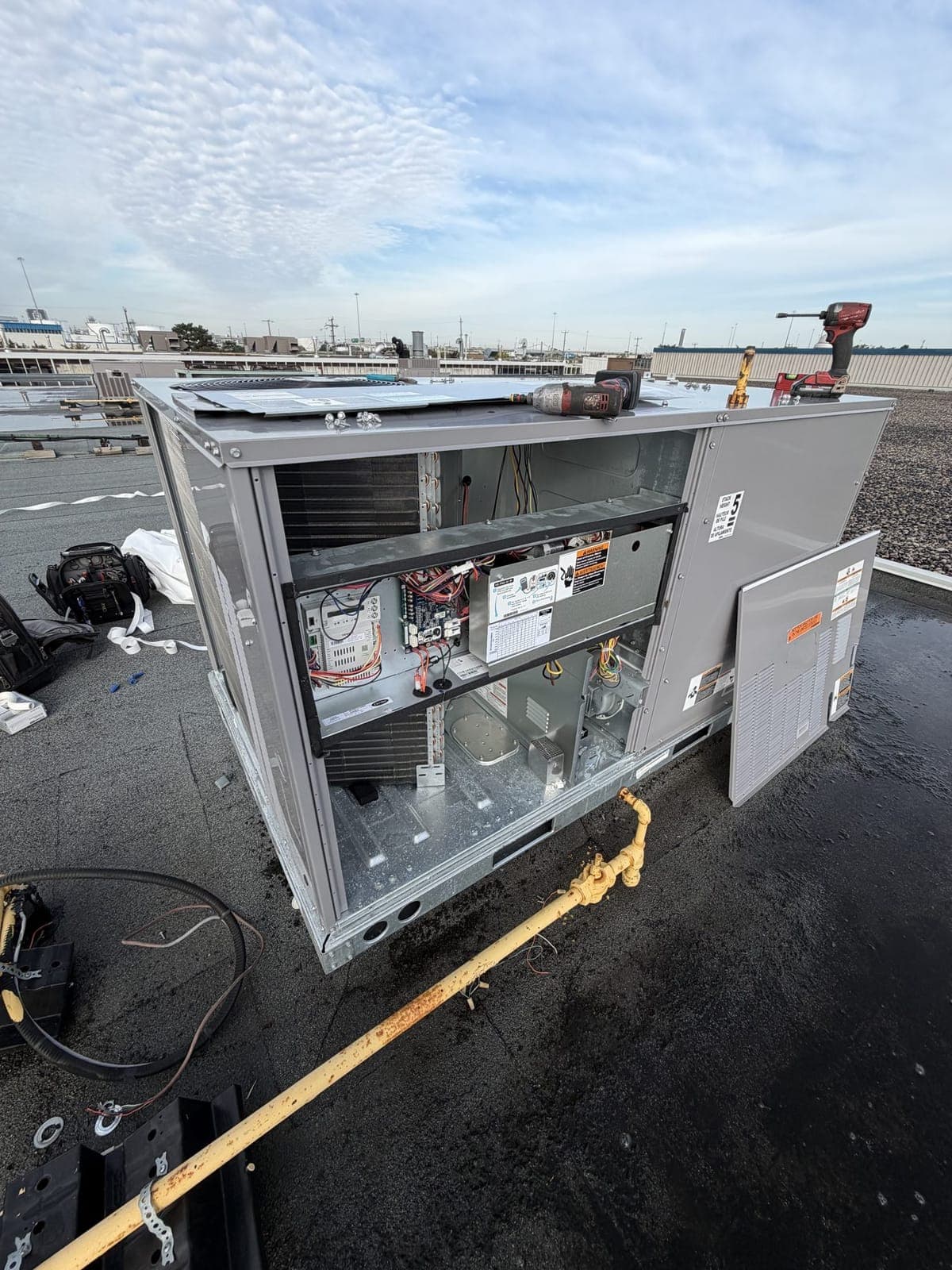
Two visits a year, timed to the season
Rooftop units and mechanical room equipment fail when they're working hardest, which in Toronto means a humid August afternoon or a night well below minus 15°C. We schedule a spring visit before cooling season and a fall visit before heating season, timed with building management so the visit doesn't surprise a tenant.
Maintenance is booked directly, visit by visit, around the schedule building management wants, rather than through a fixed product.
A record for every unit
A plaza roof or a low-rise apartment can carry several rooftop units, and treating them as one line item makes it hard to see which one is costing the building money. Each unit gets its own service record: what was checked, what was found, and what changed since the last visit. Over a few seasons, that record shows which units are holding up and which ones are heading toward replacement.
What a visit covers
A maintenance visit checks filters, belts, coils, the condensate drain, burners, and the economizer on each rooftop unit, along with electrical connections and controls. The checklist runs longer than that and differs by season: cooling-side work like coil cleaning happens before summer, heat-side work like burner and igniter checks happens before winter.
We've written the full seasonal checklist out separately rather than repeating it here: see the rooftop unit maintenance checklist for what we look at on each visit.
What gets missed without a schedule
A unit that goes a few years without a scheduled visit tends to fail the same way: a belt goes unnoticed until it breaks, a blocked drain backs up into a ceiling tile, or an igniter that's been marginal for a season finally stops lighting on the coldest morning of the year. None of those are complicated repairs on their own, but they all show up as a tenant with no heat or cooling and a call that could have been caught in spring.
Mechanical rooms and boilers on the same schedule
Buildings with a mechanical room, boilers, pumps, or a make-up air unit get those checked on the same visit as the rooftop units, since a building's heating and cooling equipment is easier to track on one schedule than several. That's the mechanical maintenance services side of the schedule: the equipment behind a locked door that nobody looks at until it fails. See commercial boiler service for what that covers on its own.