
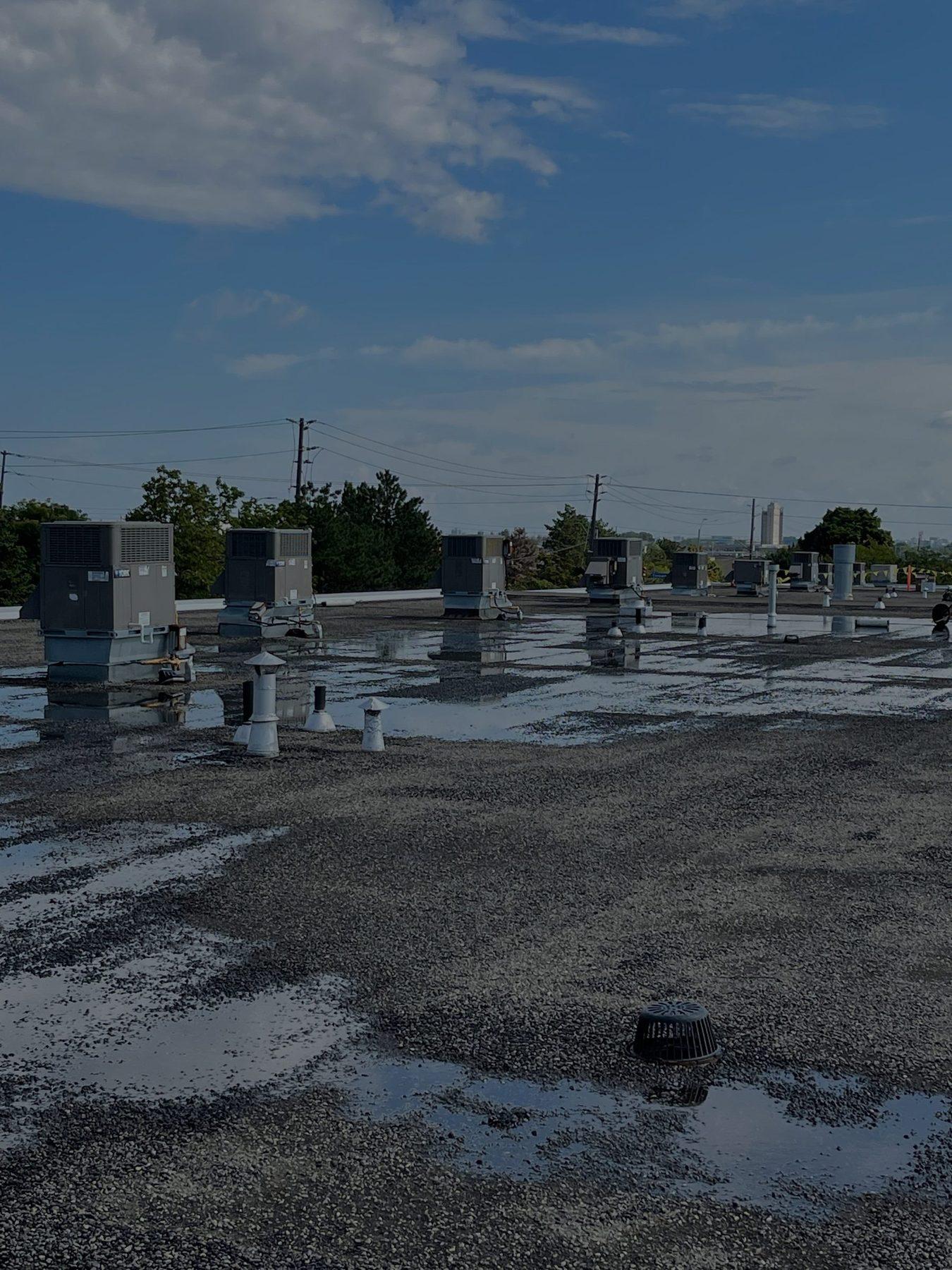
One unit, one storefront
Most strip plazas run a separate rooftop unit for each storefront rather than one system for the whole building, so a failure is usually a one-tenant problem rather than a building-wide one. That also means a roof with six storefronts can carry six units at different ages, different brands, and different service histories, even though they all look the same from the parking lot.
Tenant call or landlord call
Who calls about a down unit, and who pays for the repair, depends on the lease. Some leases put HVAC service on the tenant, some put it on the landlord, and some split it by whether the issue is a repair or a capital item like a replacement. We quote to whoever calls and note what unit it's for, but the lease decides who signs off on the invoice, and property managers usually want to be looped in even on tenant-initiated calls.
Plazas along the arterials
Strip plazas along Kingston Road, Eglinton, Dundas, and Highway 7 usually put a run of storefronts under one flat roof. Units on those roofs tend to be installed at different times as tenants change, so the service history is uneven from one unit to the next, and the roof is easy to walk but not always easy to reach.
Records across a whole roof
Because a plaza roof can carry six, eight, or more units, we keep a separate service record for each one rather than one entry for the building. That makes it possible to see which units on the roof are due for attention and which ones are still solid, instead of guessing from the last invoice.
Scheduling around store hours
Retail tenants don't want compressor noise or a crew on the roof during their busiest hours, and some units sit directly over the sales floor where noise carries. We plan the visit around what each storefront's hours look like, which on a plaza with several tenants can mean working the roof in sections rather than all at once.