
What makes a laundromat different
A laundromat runs two things hard, all day, that most commercial spaces don't: a row of gas dryers exhausting air continuously, and a bank of washers drawing hot water back to back. Both put a steady load on the building's mechanical systems rather than the occasional spike a retail space sees, and both show up as HVAC calls even though the root cause is the laundry equipment's demand on the building around it.
Make-up air for the dryer bank
Each dryer exhausts a lot of air, and a full row running together pulls a lot out of the building continuously. Without enough make-up air coming back in, the space runs negative: doors get hard to open, and in winter that pulled-in air arrives cold instead of through a unit that's supposed to temper it. We check the make-up air unit's burner, filters, belt, and dampers the same way we do on any commercial building. See make-up air unit service for what that covers.
Water heaters and boilers sized for washers
Washers drawing hot water back to back all day need more recovery capacity than a typical commercial water heater built for intermittent draw. Depending on the laundromat's size, that's either a larger commercial water heater or a boiler feeding an indirect tank. We size the equipment for what the washer bank actually draws through a busy day, not a single peak hour.
Gas piping to the dryers
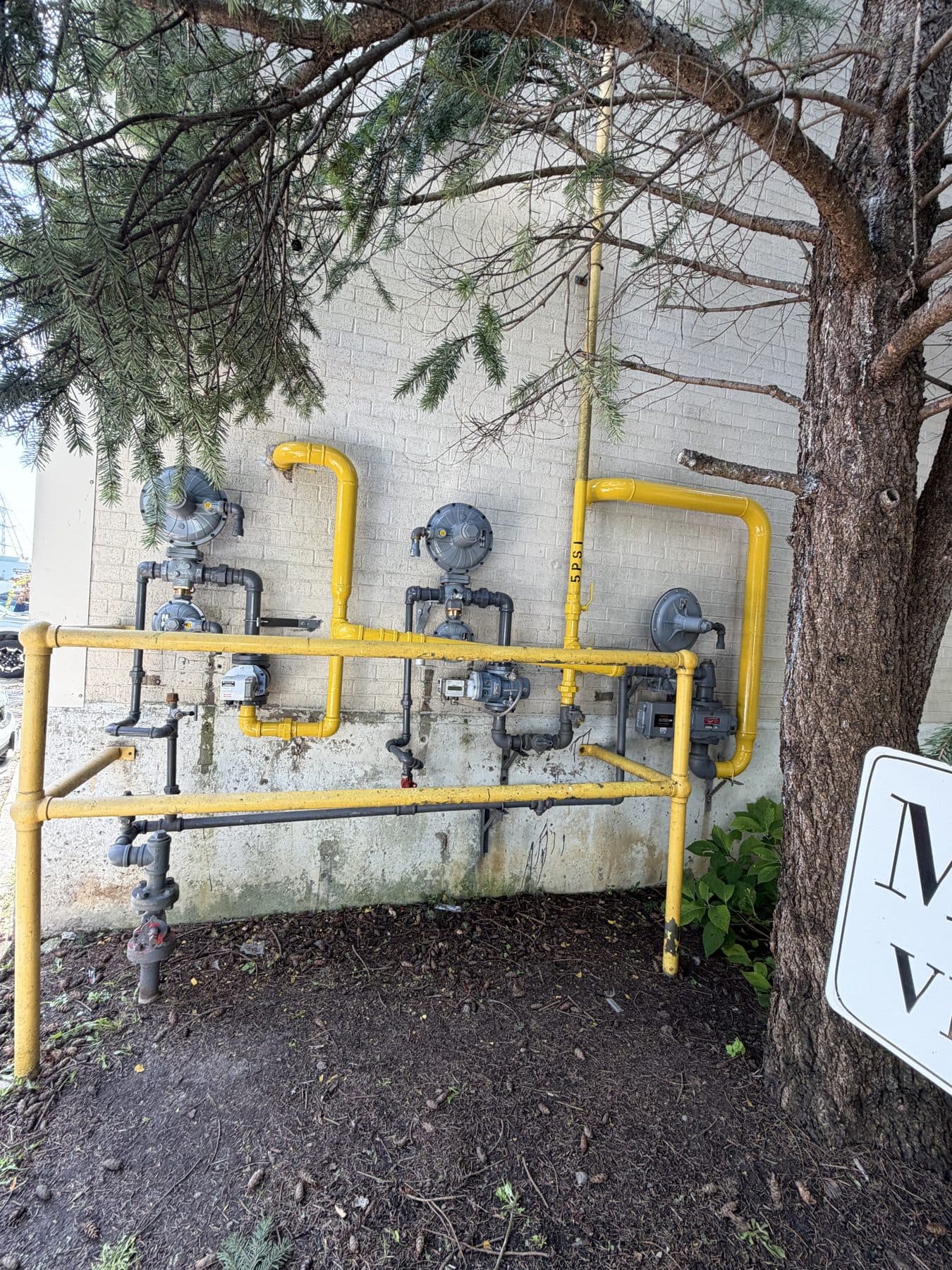
Each dryer in the bank needs its own gas connection, and we handle the gas piping to the dryers as part of installing or servicing the row. That's piping and connections at the equipment, not a broader gas-fitting service beyond what the laundry equipment itself needs.
Scheduling around opening hours
Most laundromats run long hours with customers on-site for most of them, so work on the dryer bank, water heater, or make-up air unit gets planned for the quieter part of the day where the owner can tell us when that is, rather than assuming a slow window.