
Air quality
Indoor Air Qualityin Toronto and the GTA
Indoor air quality for Toronto homes: furnace-mounted humidifiers for dry winter air, dehumidification for damp basements, better filtration for dust and smoke days, and HRV or ERV ventilation for tighter houses.
- Written quote before work
- Residential + commercial
- Toronto and the GTA
Open 24 hours, 7 days a week. Call anytime.
Signs
Signs You Need Indoor Air Quality Service in Toronto
If two or more of these sound familiar, call before it becomes a no-heat or no-cooling night.
- Static shocks, dry skin, and gaps between hardwood boards every winter
- Condensation or frost on the inside of windows on cold mornings
- A damp, musty basement in July and August
- Dust settles again a day after you clean
- Stuffy rooms and cooking smells that linger, often after new windows or insulation
- A smoky smell indoors on days when outdoor air quality is poor
Timing: Humidifiers do their work from November to March, so have yours checked in October. Dehumidification and filtration matter most in July and August, when the air is humid and smoke days come.
Toronto and the GTA
Indoor air quality in Toronto homes
Air in a Toronto home changes with the seasons. Winters run dry indoors and summers run humid, and more than half the city's homes were built before 1981, while new and renovated houses are sealed much tighter. What your house needs depends on which of those it is.
- 01
Dry winter air with forced-air heat
On nights well below minus 15 °C, outdoor air holds very little moisture, and heating it makes the air inside drier still. In a forced-air house that shows up as static shocks, dry skin, and gaps opening between hardwood boards. A furnace-mounted humidifier puts moisture back into the air as the furnace runs.
- 02
Humid summers and damp basements
Toronto summers are humid, and that moisture settles in basements, which stay cooler than the rest of the house. A musty smell or damp walls down there usually means the basement needs dehumidification. Your AC pulls some moisture out when it runs, but it does little for a basement it barely serves.
- 03
Wildfire smoke days
In recent summers, wildfire smoke has pushed Toronto's outdoor air quality into poor ranges for days at a time. A higher-MERV media filter and running the furnace fan help clean the air inside. We check that your blower can move enough air through the denser filter first.
- 04
Tighter new houses and renovated semis
New houses are built tight, and older semis often get new windows, insulation, or a gut renovation that seals them up. A sealed house holds cooking moisture, odours, and stale air. An HRV or ERV brings in fresh air and exhausts stale air on a schedule, so you are not opening windows in January.
- 05
Condos with fan coils
Nearly half of Toronto's dwellings are apartments in buildings of five or more storeys, and many condos heat and cool with an in-suite fan coil unit. The filter sits inside the fan coil and is easy to forget. We service it with building management approval and an elevator booking arranged first.
- 06
Radiator houses without ducts
Many pre-war houses in Riverdale, the Annex, and the Beaches heat with a boiler and radiators and have no ductwork. Media filters and furnace-mounted humidifiers need ducts, so those houses need a different plan. We look at what the house has and suggest equipment and a thermostat that suit it.
Common Indoor Air Quality Problems We Fix in Toronto
The calls that come in most, and what is usually behind them.
Dry air, static, and gaps in the hardwood in winter
Cold outdoor air holds little moisture, and once the furnace heats it, indoor humidity drops, most of all in older, leakier houses. We check whether a humidifier is there and working, the humidistat setting, the water supply, and the pad or drain.
Condensation or frost on windows
Usually indoor humidity is too high for how cold it is outside, from a humidistat set too high or too little ventilation in a tight house. We check the humidistat, the bathroom and kitchen exhaust fans, and whether the house has any fresh-air supply.
Damp or musty basement in summer
Humid summer air, a basement that stays cooler than the house, and little air movement down there are the usual causes. We check how the AC and ducts serve the basement, look at the drain lines, and tell you whether a dehumidifier makes sense.
Dust coming back quickly
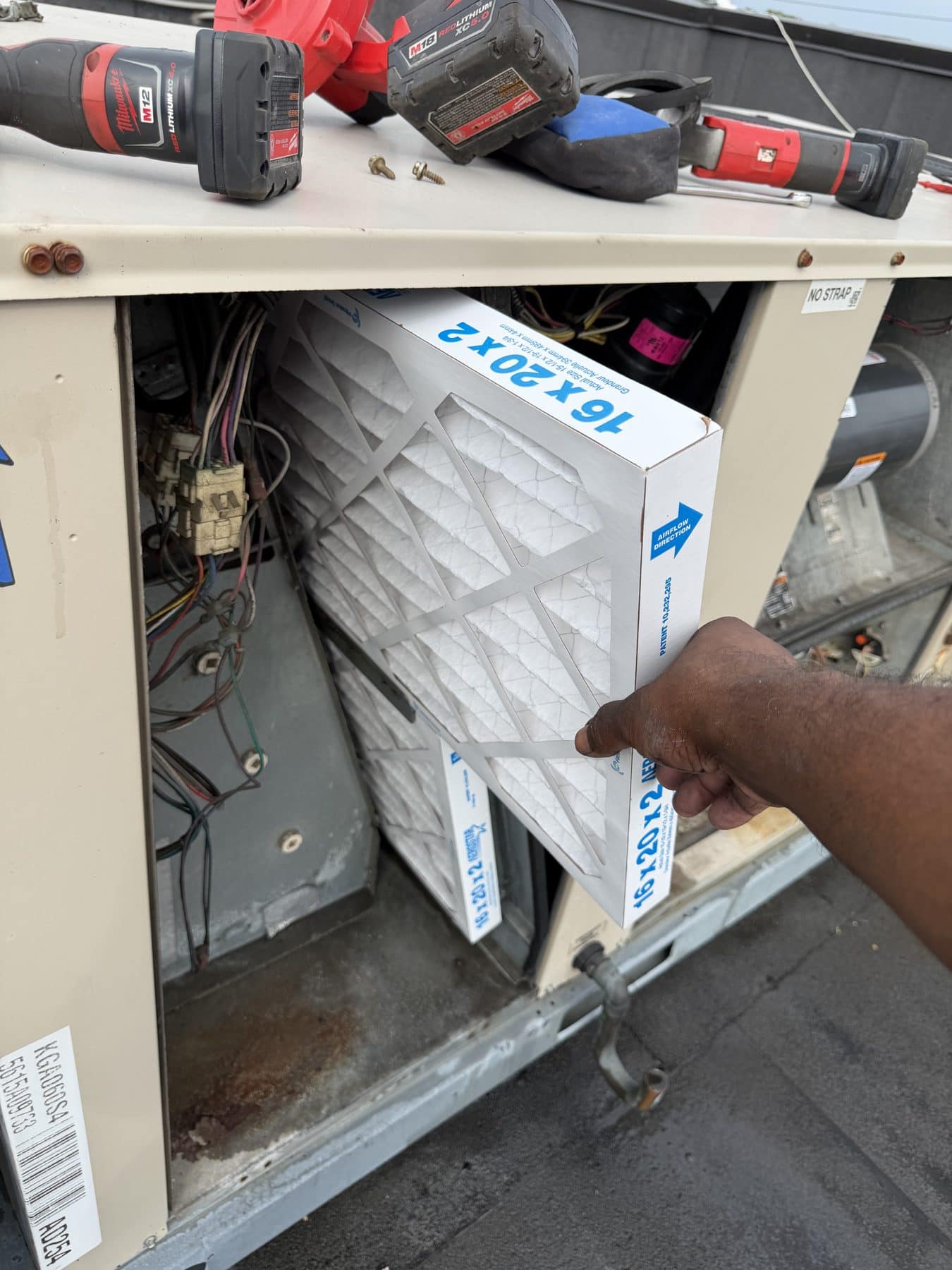
Common causes are a thin filter, a filter that lets air slip around its edges, or leaky return ducts pulling air from a dusty basement or wall cavity. We check the filter fit, the return side of the duct system, and whether a media filter cabinet will fit.
HRV or ERV noisy or not moving air
Often the filters or core are clogged, an outdoor hood is blocked, the drain is plugged, or a motor is failing. We clean what is dirty, clear the hoods and drain, and check the airflow.
Smart thermostat not running the system properly
Usually it is wiring: a missing common wire, the wrong terminal for a heat pump or humidifier, or a thermostat that does not suit the equipment. We check the wiring at both ends and set it up for the equipment you have.
Repairs, maintenance, and replacement for indoor air quality
Air filtration
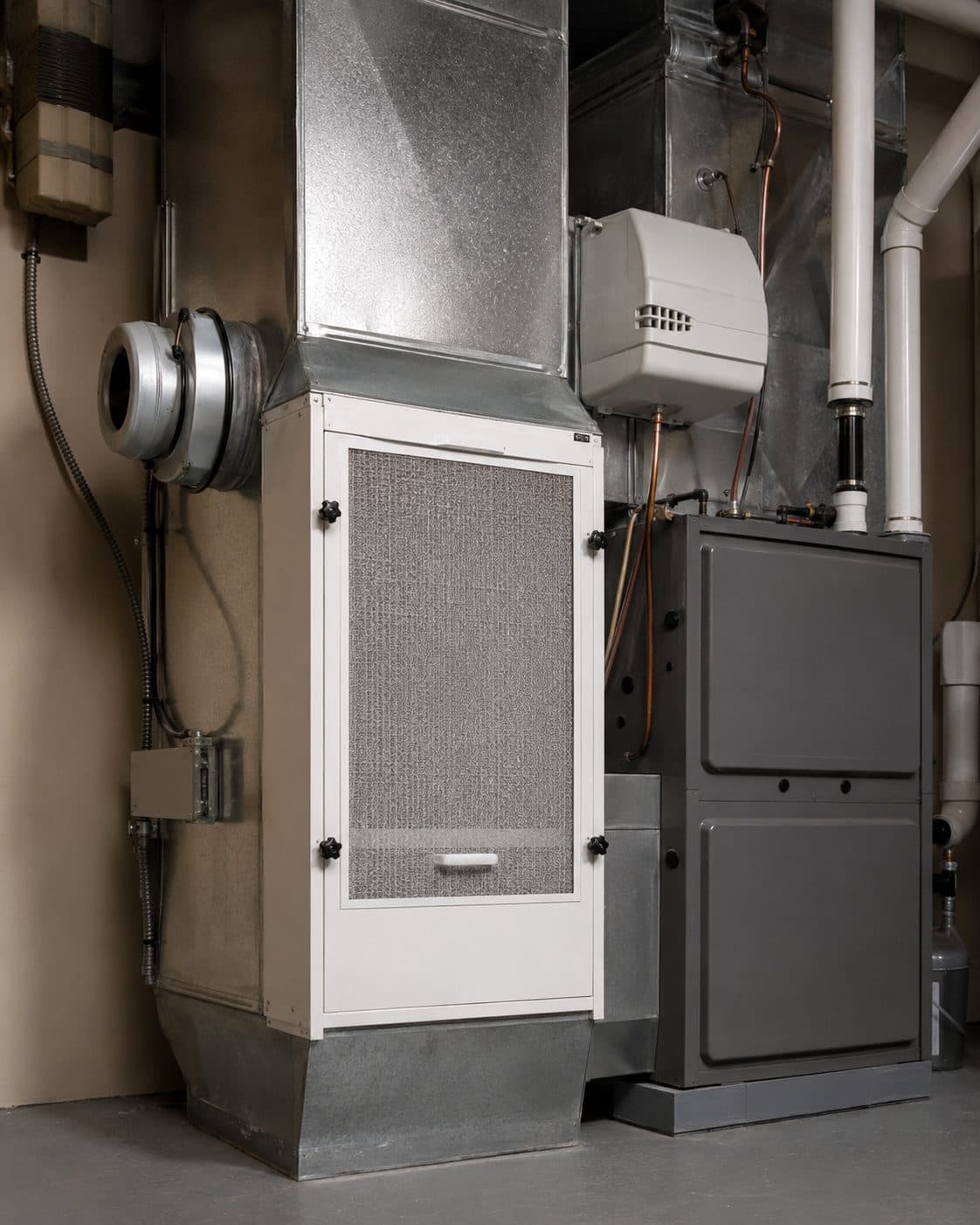
A media filter cabinet mounts beside the furnace or air handler and holds a deeper filter than the thin one most furnaces come with. Before fitting a higher-MERV filter, we check that your blower can move enough air through it.
Humidifiers and dehumidification
A furnace-mounted humidifier adds moisture as the furnace heats the air, controlled by a humidistat you turn down as it gets colder outside. In summer the AC removes some moisture, and a dehumidifier handles the basement or whatever the AC cannot.
HRV and ERV ventilation
An HRV or ERV brings in fresh outdoor air and sends stale air out, recovering heat from the outgoing air along the way. We install Venmar and RenewAire units, balance the airflow, and clean the cores, filters, and drains.
Smart thermostats and controls
A smart or programmable thermostat can run the furnace, AC, heat pump, humidifier, and ventilation from one place. We check your wiring and equipment before recommending one.
What we add to a system
Each one mounts on the furnace or air handler you already have.
Whole-Home Humidifier
Adds balanced moisture in winter: warmer-feeling air, less static and dry skin, and protection for wood floors and furniture.
Smart Thermostat Upgrade
Precise temperature control and remote scheduling from your phone. Some homes need extra wiring (a C-wire) for it.
Duct Smoke Alarm
A smoke detector mounted inside your ductwork that shuts the system down so smoke isn't pushed through your home.
HEPA Air Filter
Whole-home, hospital-grade filtration that captures up to 99.97% of fine particles, allergens, dust, and smoke.
Electronic Air Cleaner
Electrically charges airborne particles and traps them on washable, reusable collector plates, so there are no filters to replace.
How a visit goes
- 01
Tell us what it is doing
Call or send the form. Equipment, what it is doing, and where you are.
- 02
We look at it and give a straight answer
The whole system, including the part that did not fail yet. You get the options in plain words.
- 03
Fix or replace, your call
Written quote first. No work starts until you say so.
Sizing
Indoor Air Quality Sizing for Toronto Homes
We size filtration, humidifiers, and ventilation to the house: its floor area, how many people live there, and how tight it is. A house that got new windows, spray foam, or a gut renovation holds more moisture and needs more mechanical ventilation than it did before. A humidifier has to match the heated area and how much outdoor air leaks in over the winter. We measure and look before we recommend a size.
 Filter change
Repair or replace
Filtration or humidity when
- Dust, allergies, or smoke days are the complaint
- Winter brings static, dry skin, and gapping floors
- The basement is damp and musty in summer
- The thin furnace filter is doing all the work
Ventilation when
- The house was sealed with new windows, insulation, or a renovation
- Windows sweat even with the humidifier turned down
- Cooking smells and stale air hang around
- The house has no mechanical fresh-air supply
Most homes need one or two of these. We size the equipment to the house and the people in it, and tell you which ones apply after we look.
What moves the price
Factors, not numbers. We quote after we see it.
Type of equipment
A filter cabinet, humidifier, dehumidifier, HRV or ERV, and a thermostat each install differently.
Ductwork tie-in
Ventilation and dehumidifiers may tie into the furnace ducts or need their own, depending on the house.
Wall hoods for ventilation
An HRV or ERV needs two outside hoods, spaced apart. On a semi with a narrow side yard, finding the right spots takes planning.
Water and drain
Humidifiers need a water line, and many need a drain. Dehumidifiers and HRVs need a drain too.
Electrical and wiring
Some equipment needs a dedicated circuit, and a new thermostat may need new low-voltage wiring.
Access
A tight basement furnace room or a finished ceiling takes longer to work around.
Written quote after the visit. No work starts until you say so.
Indoor air quality: brands we install and service


Ways to pay
Paying for an install
Ask about payment options when we quote the job. The written quote lists the equipment and the work, so you have the full number before you decide.
Indoor air quality, answered
Do I need a humidifier in a Toronto house?
Most forced-air houses in Toronto run dry in winter, when cold outdoor air holds little moisture. Static shocks, dry skin, and gaps between hardwood boards are the common signs. A furnace-mounted humidifier adds moisture as the furnace runs, and you turn it down on the coldest nights so the windows do not sweat.
What filter should I use when wildfire smoke reaches Toronto?
A higher-MERV media filter catches more fine particles than a thin standard filter. Keep the windows closed and the furnace fan running so the air keeps passing through it. We check that your blower can handle the thicker filter before you switch.
I live in a condo with a fan coil. What can you do?
Many Toronto condos heat and cool with an in-suite fan coil, and its filter sits inside the unit. A clogged one cuts airflow and lets dust through, so it needs regular attention. Condo work usually needs building management approval and an elevator booking, and we sort that out with you before the visit.
Do I need an HRV after renovating my semi?
If the renovation sealed the house with new windows, insulation, or spray foam, it now holds more moisture and stale air than before. Window condensation and stuffy rooms are the signs. An HRV or ERV gives the house a steady fresh-air supply, and we work out where the wall hoods can go on a narrow lot.
What's the difference between an HRV and an ERV?
Both bring in fresh outdoor air and recover energy from the air leaving the house. An ERV also moves some moisture across in that exchange. An HRV does not, and we recommend one or the other based on the house.
Will a smart thermostat work with my system?
It depends on your equipment and wiring. Some need a common wire that older houses often do not have, and heat pumps and boilers have their own wiring needs. We check both before recommending one.
Indoor air quality by area
Related services
Get a written quote for indoor air quality
We call you back
At the number you gave us, to ask what the equipment is doing.
We book a window
A day and time that works. Scheduled visits outside the regular route.
Written quote before work
You see the number before anything is replaced. Nothing starts until you say so.